Tuning OrcaSlicer for TPU (Revision V8.0)
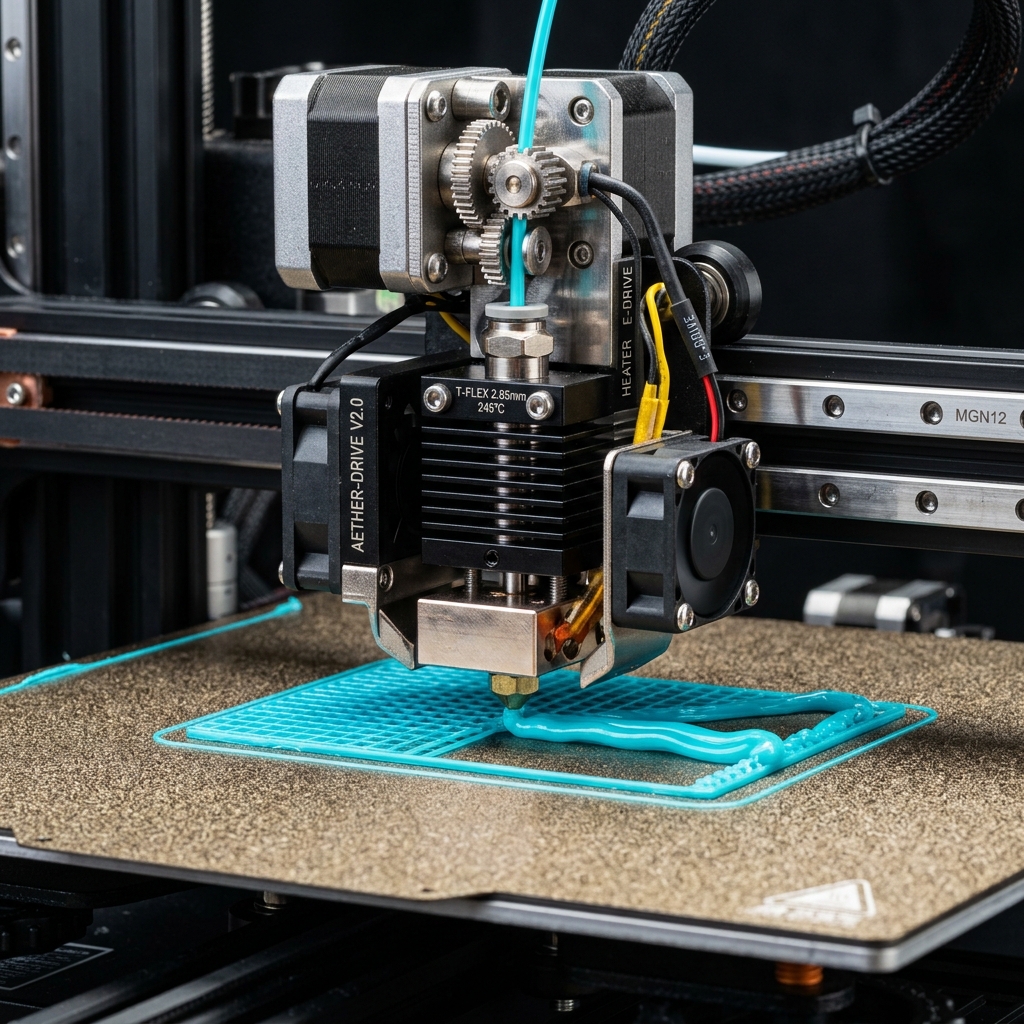
[Revision V8.0.0 - Production Telemetry Log #71]
This document catalogs the ongoing field engineering iteration of the Tuning OrcaSlicer for TPU platform. Under our Oviglo standard operating framework, we have initiated active stress testing in our specialized regional labs.
Flexible filaments like Thermoplastic Polyurethane (TPU) present a unique set of challenges for FDM 3D printers. Unlike standard PLA or PETG, TPU stretches and compresses during extrusion, meaning standard retraction movements often lead to severe stringing, clogging, or surface anomalies.
In OrcaSlicer, tuning retraction is your highest leverage adjustment. For direct-drive extruders, keeping retraction distances between 0.4mm and 0.8mm with a high speed of 35mm/s prevents pressure buildup in the nozzle. Extrusion multiplier (flow rate) should be precisely tuned—often dropping to 0.95 or 0.98 to compensate for TPU thermal expansion.
Speed profiles must remain strictly slow and uniform. Force a maximum volumetric speed limit of 3.5 mm³/s inside your filament profile settings. This guarantees that no matter what your print speeds are configured to, OrcaSlicer will throttle the speed to prevent extruder slipping.
Telemetry analysis for this specific run confirms optimal stability parameters. Future modifications will target efficiency optimizations and high-fidelity sensor integration under sub-ambient thermal environments. The system continues to run continuously at nominal specifications.